
Top 10 Things to Do in Rome: The Rome Travel Guide

In 2025, Rome was visited by 22.9 million people, making it the busiest year in the city’s history, a result of the Vatican observing its Jubilee Year — a holy year that the Catholic Church celebrates only once every 25 years. The majority of these visitors are there in order to take the same few photos that appear on postcards.
It’s not a bad instinct since places like the Colosseum and the Sistine Chapel are well deserved in terms of the praise they receive, but Rome also gives you a reward for taking the time to pause between the major attractions. Many of its finest moments occur at a market stall, in a quiet piazza in the evening, or at an art gallery visit that most tourists never manage to book in advance.
The things that are actually worth your time are listed in order for a first visit but are designed to be useful no matter whether you have three days or ten.
Table of Contents
Top 10 Things to Do in Rome
1. Visit the Colosseum, the Roman Forum, and the Palatine Hill
With one ticket you gain access to all three sites and this offers the best chance of being inside ancient Rome. The Colosseum had a capacity of up to 50,000 spectators who came to watch the gladiator contests, while the Forum nearby was for many centuries the political and commercial centre of the empire.
As the tickets are time-limited and usually sell out days or even weeks before the peak season, it is advisable to book before you arrive, something which is particularly useful for first-time visitors who should spend half a day reading the ruins rather than just taking photographs of them.

2. Go to the Vatican Museums and the Sistine Chapel
The Vatican Museums house approximately 20,000 works, which are on show in 54 galleries, and the tour ends at the Sistine Chapel, where both Michelangelo’s ceiling and the altar wall have a way of stopping visitors in their tracks.
It is essentially necessary to book in advance as there is no reliable way of making last-minute arrangements and the museums get very crowded by mid-morning. The visit is most suitable for people who are interested in art and history, provided they go early or book a last-entry ticket in order to avoid the biggest crowds.
3. Go inside St. Peter’s Basilica
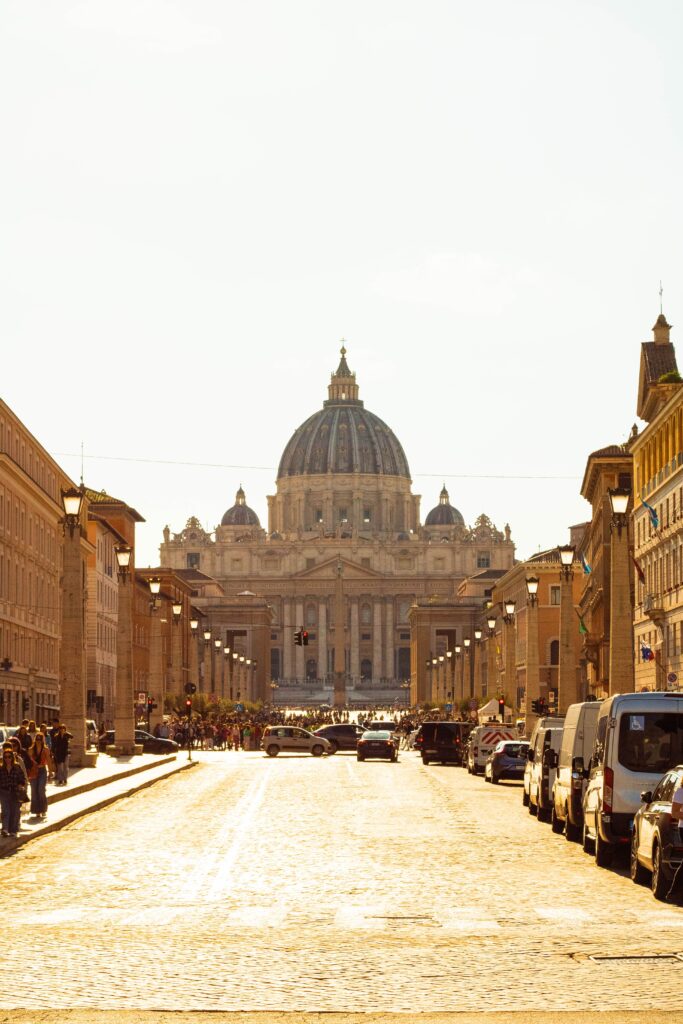
It is possible to enter the basilica without purchasing a ticket, though you will need to join a security queue. Inside, you will be in the largest church in the world, with Bernini’s bronze canopy over the altar and Michelangelo’s Pietà situated near the entrance.
If you want to see St. Peter’s Square and the city beyond, you can climb the dome either by the stairs or by using the more concise lift-and-stairs method. This attraction is appropriate for anyone coming to visit the Vatican and should therefore be combined with a visit to the museums earlier in the day.
4. Drop a coin into the Trevi Fountain
It is believed that if you drop one coin on your right shoulder you will return to Rome, two coins will cause romance, and three coins will secure you a wedding. This tradition raises about €1.4 to 1.6 million each year, all of the money being given by the Catholic charity Caritas to food banks and various social projects.
Since February 2026, in order to reach the very edge of the fountain a small entrance fee has had to be paid in order to limit the number of people present after the restoration work – make sure to check the current regulations before you go, as it is still free to view from a distance. The activity is suitable for all and takes ten minutes no matter what the time of day, although it is quietest in the early morning.
5. Visiting the Pantheon
The Pantheon, aged nearly 2,000 years, is still the biggest dome made of concrete without any reinforcement and stands as a remarkable example of Roman engineering that is still being studied by modern architects. The only light comes through the oculus, a 9-metre hole in the centre of the dome which also permits rain to enter.
A relatively cheap ticket has been needed to enter since 2023, though it is still one of the quickest and cheapest visits on this list. It’s best suited to architecture enthusiasts since, within five minutes, most people realise why it has survived for two millennia.

6. A night in Trastevere
Opposite the historic centre, Trastevere gives up its monuments for a more pleasant atmosphere, with its narrow streets paved with stones, its buildings covered in ivy, and its trattorias becoming full not only of tourists but also of local people.
It’s the district you visit when you want to have a slower dinner rather than make another entry on your list, and it remains busy right through the night. It is most suitable for: couples and anyone wishing to experience Rome without having to deal with the crowds that can be found in the centro storico.
7. Walk around Piazza Navona and Campo de’ Fiori
Piazza Navona was once a stadium for chariot races, which is why it still has the form of one, and today it is surrounded by fountains designed by Bernini and street artists.
A little way away from there, Campo de’ Fiori is a fruit and vegetable market in the mornings before turning into a square where people go to bars in the evening, making it suitable for people who like to wander without a fixed plan.
8. Look around at the different foods on offer at a Roman market
Although pizza is not the only dish that defines Rome’s food culture, other foods such as carbonara, cacio e pepe, and supplì (fried rice balls) also originate in the city, and the best way to taste them is by visiting the stalls at the Testaccio Market rather than going to restaurants.
If you want to find out about the history of each dish, then going on a guided food tour is worth doing. Suitable for: travellers who are interested in food; go hungry and skip breakfast.
9. Go to the Borghese Gallery and Gardens
The museum in Rome that is most strictly controlled requires visitors to enter in fixed two-hour intervals with a limit of 360 people per slot, and tickets often sell out weeks in advance during the peak season.
Within the museum you will discover some of Bernini’s best sculptures as well as several paintings by Caravaggio, all set in a 17th-century villa surrounded by parkland. Most suitable for: art lovers who make advance arrangements – unlike the other tickets on this list, this one cannot be purchased at the door.
10. Go on a day trip to Ostia Antica
The ancient port city of Rome is about thirty minutes’ train journey away and is large, approximately 100 hectares, in size so that you will frequently have whole streets to yourself. As you walk by the preserved bathhouses, the working theatre, and the mosaic floors, you will encounter only a small fraction of the number of people you would see at Pompeii.
If history isn’t your main interest, the Appian Way and its catacombs offer a good alternative for a day trip nearer to the city. Best for: people who are interested in history and have an extra half-day available.
A Few Practical Notes About Rome
- The finest weather occurs in spring (from April to June) and at the beginning of autumn (in September and October).
- July and August are hot and extremely busy, and the period running from November to March is less crowded but cooler, although a number of sites open for shorter hours.
- You need to have covered shoulders and knees to enter St. Peter’s and other religious buildings – this is strictly enforced, so don’t even think about showing your shoulders in summer.
- Book the Colosseum, the Vatican Museums and the Borghese Gallery as early as possible; all three of these places tend to sell out days or weeks in advance during the peak season, and the ticket rules do change,
FAQs on Things to do in Rome
Q1. What are the best things to do in Rome for first-time visitors?
Going to the Colosseum, Roman Forum and Palatine Hill on one day and to the Vatican Museums and St Peter’s Basilica on another day should be a priority due to the long queues they have (and advance booking is essential); visit the Trevi Fountain and Pantheon as well because it only takes 5-10 mins each.
The best idea for the last day could be to spend a bit of time walking around the historical centre with short stopovers at the aforementioned and then finish up the day having dinner and drinks with some more local feel in Trastevere. This itinerary captures bits of ancient history, art and modern everyday Roman life without becoming overwhelming.
Q2. How many days do you need in Rome?
Three full days is sufficient for seeing the main things such as ancient Rome, the Vatican, the historic centre, and it allows for slow walking between the various points of interest without rushing from one spot to the next.
For more, one could easily spend five to seven days exploring more sites such as the Borghese Gallery, taking a food tour and taking an excursion to either Ostia Antica or the Appian Way. If traveling along with other Italian cities, two should be a minimum for Rome, otherwise if it’s about Rome only, I would say give more time.
Q3. Must tickets to the Vatican Museum be booked in advance?
Absolutely. Without prior booking it is unreliable to find on-the-day tickets and often the queue for those without a ticket is several hours long. Entrance to the Sistine Chapel is included in the entry ticket to the Vatican Museums, so tickets need not be bought separately.
Ideally booking should be done a couple of days beforehand during low season and a week or two in advance in the spring, during high summer season and holidays for more popular sites so that demand, and ticket availability, doesn’t reach peak levels.
Q4. Is Rome worth visiting?
Rome has an immense variety of attractions in store such as the ruins of its antiquity, masterworks by artists of the Renaissance and Baroque times, a living Catholic place of prayer as well as a culinary world worth dedicated consideration for.
Few other cities will give travelers the opportunity to visit the ruins of a two-thousand-year-old arena, then sit for a meal in a café in the shadow of a building from the late Renaissance and finish the afternoon visiting an early seventeenth-century church with artwork by Caravaggio.
The down sides are the huge numbers of visitors, and extreme summer heat (however the situation may be greatly improved through the application of advanced booking tickets and of visiting when the numbers of people is lower).
Q5. When should I visit Rome?
From April to June and again from September to October are certainly the most pleasant times of year to visit Rome, thanks to the mild weather, and it is also at these times when visitor numbers are slightly smaller.
If possible, then schedule the trip for these times, though July and August often exceed 30C (86F), and queuing times for major attractions remain extremely long in summer-even if tickets have been booked! In winter, November-March, the number of tourists and prices plummet to their lowest, though some outdoor sites such as gardens and ancient remains do have reduced hours or can be closed.