
Top 20 Things to Do in China

Liu Yi, an ancient Chinese writer, says, “Reading ten thousand books is not as good as traveling ten thousand miles”. China seems to have taken its own advice: in 221 BCE, a king named Ying Zheng finished conquering six rival states, declared himself Qin Shi Huang, the first emperor of a unified China, and ordered the defensive walls between the old kingdoms joined into one. He also put hundreds of thousands of workers to building an underground army of life-sized clay soldiers to guard his tomb.
More than two thousand years on, both projects are still there, and nearly all of the structures built after them have also survived.
The reason why China is difficult to summarize is that alongside 5,000 years of unbroken history there are some of the fastest trains and tallest skyscrapers in the world, features which are often found in the same city. In 2025 more than 35 million foreign tourists visited, setting a record for that year, thanks to a visa-free policy which now applies to dozens of countries. The following 20 places and experiences are worth planning a trip around them and are distributed across different regions rather than all being concentrated in Beijing and Shanghai.
Table of Contents
Top 20 Things to Do in China
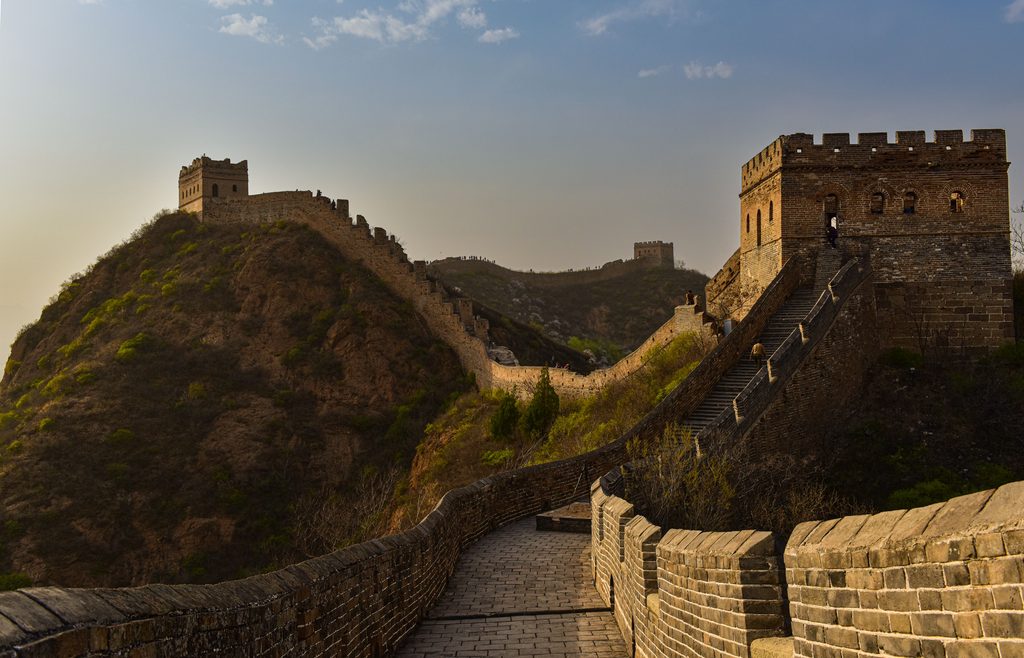
1. Walk the Great Wall of China
The entire length of the wall, extending throughout all the dynasties that added their own sections, is 21,196 kilometres, and the part of the wall from the Ming dynasty that has been best preserved alone measures 8,852 kilometres.
Badaling is the section that has been restored the most and receives the most tourists, whereas Mutianyu and Jinshanling offer comparable views but with considerably fewer tour groups.
Best suited for: first-time visitors should choose a section based on how much walking and how crowded they want it to be, not just on its proximity to their hotel.
2. Explore the Forbidden City
This complex was constructed for 24 emperors of both the Ming and Qing dynasties and is now known as the Palace Museum, at which entrance is by time slot, and the number of visitors is restricted, so it would be a good idea to book in advance if you are visiting during the peak season.
Give yourself at least three hours to get past the main halls into the quieter side courtyards, where the crowds thin out fast.
Best for: history lovers; pair it with nearby Tiananmen Square, which sits at its front gate.

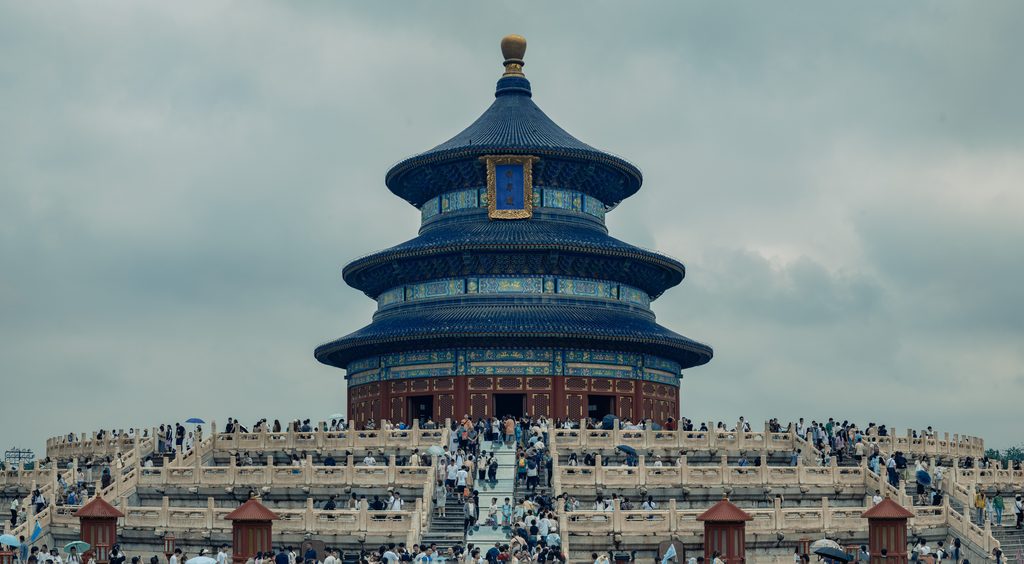
3. Wander the Temple of Heaven
The emperors of the Ming and Qing dynasties used the site as a place to pray for a good harvest; it has a distinct round shape which was achieved without the use of any nails, since it was believed that heaven is round and earth is square.
Being quieter than the Forbidden City, the temple also functions as a public park and it is therefore possible to see a great number of people there doing tai chi or playing cards. It is an excellent optional extra for your day at the Forbidden City.
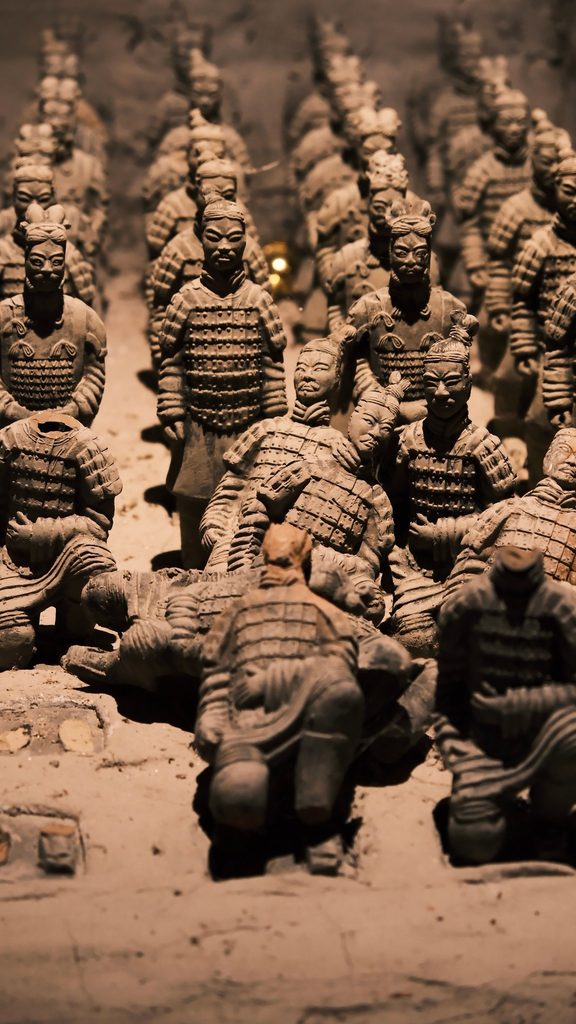
4. See the Terracotta Army
In March 1974, some farmers who were digging a well close to Xi’an struck upon a life-sized clay head rather than coming across water, as a result of which an estimated 8,000 soldiers, all having individual faces, were discovered and erected to guard the tomb of Qin Shi Huang. Work at the site is still ongoing, and further figures have been found decades later.
Best Suited for: People who enjoyed learning the backstory of the Great Wall will also like this since both places are associated with the same emperor.
5. Walk the Bund and Yu Garden in Shanghai
The Bund gives you Shanghai’s colonial-era riverfront facing the glass towers of Pudong across the water, best seen at dusk when both sides light up. A short walk inland, Yu Garden flips the mood entirely — a Ming dynasty scholar’s garden of koi ponds and rockeries tucked behind the old city’s bazaar streets. Best for: a single day that covers old and new Shanghai without much travel time between them.
6. Cruise the Li River and Cycle Yangshuo
The limestone karst peaks along the Li River are famous enough to appear on China’s 20-yuan banknote, and a slow boat from Guilin to Yangshuo takes you past them for several hours.
Once in Yangshuo, renting a bike to ride between rice paddies and smaller peaks is a good way to slow down after a few fast-paced cities.
Best for: couples and travellers wanting scenery over sightseeing.
7. Visit the Chengdu Panda Base
Founded in 1987 with six rescued pandas. Today, they’ve grown it into the largest giant panda breeding and research center.
If you want to see the pandas at their most active – generally around feeding time (7:30–10:00 a.m.), plan to hit it right at opening. Many of the pandas will be sound asleep by early afternoon,.
This spot is perfect for families as red pandas also call the grounds home, offering a more easily approachable dose of fluff.

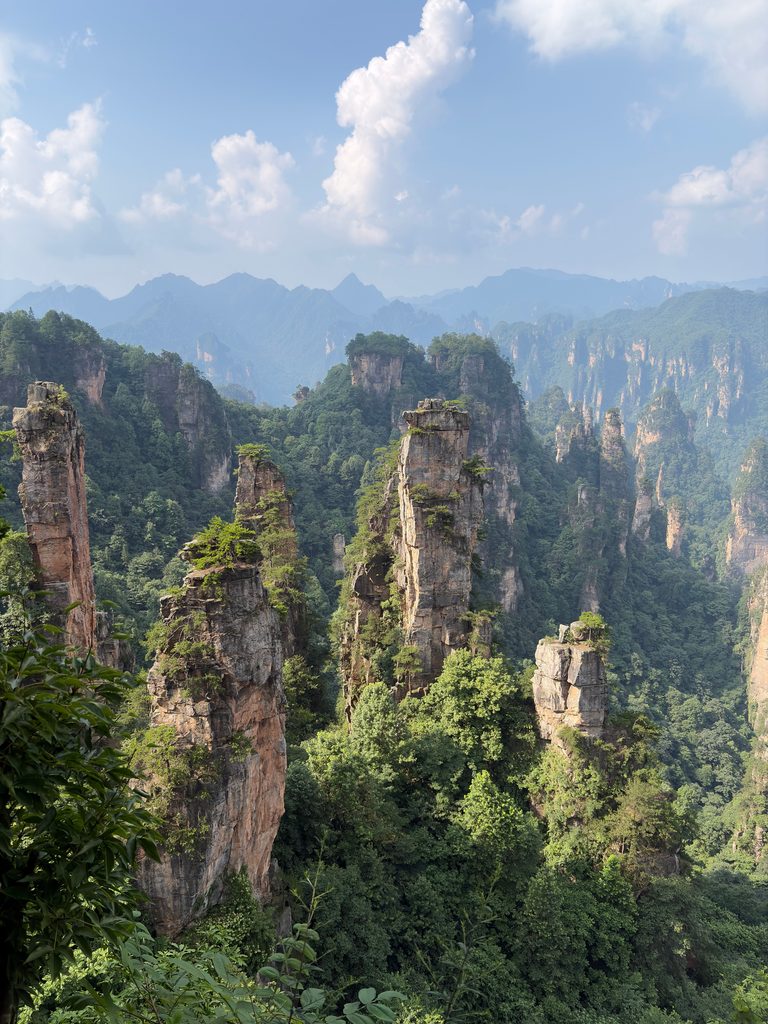
8. Hike Zhangjiajie National Forest Park
These are China’s “Avatar” mountains, formed by hundreds of towering, freestanding sandstone pillars rising from a thick forest.
Top of one mountain, named after Avatar, for if that doesn’t enthuse you, cross a bridge over an abyss for you! From 2016, when the 430-m-long Zhangjiajie Glass Bridge opened connecting two cliffs 300m above the canyon, there has been no shortage of thrill-seekers.
9. Walk Around West Lake
The most well-known lake in China is a constant in Chinese art and poetry of the last thousand years; it’s also on UNESCO’s world heritage list. After the hustle and bustle of Shanghai (a quick, fast-train journey, merely 40 mins away) hire a bike and explore West Lake.
Half a day out will present you with classic bridges, pagodas and, in a secluded tea house, you’ll taste a glass of famous Longjing (green tea). Take a deep breath after busy days in any major Chinese cities with this experience.
10. Explore the Classical Gardens of Suzhou
Miniature landscapes of “mountains” of stone or ponds that represent lakes – small gardens like those built by Chinese scholars and government officials during the Ming and Qing dynasties were created in enclosed spaces throughout the city. The Suzhou Garden is also listed by UNESCO as a World Heritage Site.
It’s also known as “Venice of the East” for its ancient canals, and a short boat ride should definitely be a part of touring a few.
Best Suited for: The garden and architecture aficionado in your traveling party; The Humble Administrator’s Garden is the largest and most elaborate.
11. Ride China’s High-Speed Rail Network
At over 50,000 kilometres, China’s high-speed rail system is the largest in the world, connecting nearly every major city with trains running up to 350 km/h.
It is easy to book tickets using the official 12306 app or via Trip.com with your passport, and the journey itself, which is smooth, reliable and frequently cheaper than air travel, usually gives first-time visitors a greater surprise than any individual attraction.
Best suited for everybody; it isn’t so much something to see as the fastest means of getting to the other destinations on this list.
12. Visit the Potala Palace
Rising over Lhasa at 3,650 metres, this former winter residence of the Dalai Lamas is Tibet’s defining landmark.
Foreigners can’t visit Tibet independently; you will need a Tibet Travel Permit arranged through a licensed agency, plus a booked guide for your whole stay, and timed entry to the palace itself should be reserved several days ahead.
Best for: travellers with extra time and a tolerance for logistics; the altitude alone means building in a rest day.

13. Walk Pingyao Ancient City
This walled city in Shanxi province was China’s banking centre in the Qing dynasty, home to the country’s first draft banks, and its city walls, courtyard homes, and stone streets have survived largely intact. Staying overnight inside the walls, once the day-trippers leave, is the difference between seeing a museum and feeling like you’re in one.
Best for: history travellers who want a Ming-Qing era city without the Forbidden City’s crowds.
14. See the Mogao Caves
Carved into a cliff face outside Dunhuang over roughly a thousand years, these nearly 500 surviving caves hold Buddhist murals and manuscripts left behind by Silk Road traders and monks. Access is by guided tour only, with a strict cap on daily visitors to protect the artwork, so book well ahead if Dunhuang is on your route.
Best for: art and Silk Road history enthusiasts — it’s remote, so plan it as a dedicated stop rather than a day trip.
15. Trek Tiger Leaping Gorge
One of the world’s deepest river canyons, this gorge in Yunnan gets its name from a legend about a tiger escaping hunters by leaping across the narrowest point. The high trail takes one to two days on foot, past small guesthouses that let you break the trek into manageable stretches.
Best for: hikers with reasonable fitness and a spare day or two.
16. Explore Lijiang Old Town
A beautiful site listed by UNESCO and situated along a canal, constructed by the Naxi people. The attractive streets and waterways of Lijiang remain lively well into the evening.
Yet, since it is very popular with domestic tourists, the best time to visit is in the morning, prior to the arrival of the crowds.
This historical place makes an ideal accompaniment to a trip to the Tiger Leaping Gorge.
17. Cruise the Yangtze Through the Three Gorges
A multi-day boat trip through the Qutang, Wu, and Xiling gorges shows you dramatic river cliffs alongside the scale of the Three Gorges Dam, the world’s largest hydroelectric project. Cruises typically run three to four days between Chongqing and Yichang, with shore excursions to smaller sites along the way. Best for: travellers who prefer to unpack once and let the scenery come to them.
18. See the Yellow Mountains (Huangshan)
Huangshan’s granite peaks, twisted pine trees, and seas of cloud have been inspiring Chinese landscape painting for centuries, and standing at a viewpoint at sunrise makes the reason obvious. Cable cars handle most of the elevation gain, though reaching the best viewpoints still involves a fair amount of walking.
Best for: photographers — stay overnight on the mountain to catch both sunset and sunrise.
19. Visit the Confucius Temple and Cemetery in Qufu
Qufu, in Shandong province, is where Confucius was born, taught, and is buried, and the temple complex built in his honour has been expanded by successive dynasties for over two thousand years. The adjoining cemetery, still in use by his descendants, is one of the longest continuously maintained family burial grounds in the world.
Best for: anyone interested in the philosophy that shaped Chinese society, government, and education for two millennia.

20. Eat Your Way Through China’s Regional Cuisine
More variation in food customs is found among the different regions of China than most people who are visiting for the first time anticipate: in Chengdu or Chongqing the Sichuan hot pot is very spicy, in Beijing the Peking duck is prepared by a slow roasting process, and in Guangzhou the Cantonese dim sum is based on small plates and the tradition of morning tea. Taking food seriously as part of the itinerary rather than just treating it as something to do between sightseeing activities is one of the more unforgettable aspects of a trip to China.
Suitable for: Everyone. Just be careful to slow down if you’re not used to the chilies.
China Travel Tips: Things to Know
- By 2026, citizens from a number of countries, such as most of the EU, the UK, Canada, Australia and New Zealand, will be able to enter China without a visa for up to 30 days.
- Since this visa policy may change, it is advisable to check that you are eligible before you travel.
- Many commonly used apps and websites (such as Google, WhatsApp, and Instagram) are blocked in China, so it is advisable to download a VPN before you arrive.
- The use of cash is rare outside tourist areas and foreign cards can be used on systems such as Alipay and WeChat Pay.
- People who are visiting for the first time should decide to concentrate on two or three areas rather than trying to see all of the country in a single trip.
- Although the United States is not listed, it does qualify for a visa-free transit of 240 hours at the major ports.
FAQs on Top 20 Things to Do in China
Q1. What are the best things to do in China for first-time visitors?
Beijing covers the Great Wall, Forbidden City, and Temple of Heaven in two to three days, while Xi’an adds the Terracotta Army as an easy add-on by high-speed rail. Shanghai rounds out a first trip with the Bund, Yu Garden, and a taste of modern China’s pace. If you have extra time, Guilin’s Li River or Chengdu’s pandas add scenery and wildlife without requiring the extra planning that Tibet or the Silk Road route needs.
Q2. Do you need a visa to visit China?
It depends on your nationality because as of 2026, citizens of dozens of countries, including most of the EU, the UK, Canada, Australia, and New Zealand, can enter visa-free for up to 30 days. Travellers from countries not on that list, including the US, can still use the 240-hour visa-free transit policy at major ports if their itinerary fits the rules. This policy has expanded rapidly and keeps changing, so check your eligibility on an official source close to your travel date rather than relying on older articles.
Q3. How many days do you need in China?
Ten to fourteen days lets you comfortably cover Beijing, Xi’an, and Shanghai with real time in each, since high-speed rail makes the connections between them fast. Three weeks or more opens up additional regions like Guilin, Chengdu, or Yunnan without feeling rushed. A trip of a week or less usually means picking one region deeply rather than trying to string multiple cities together.
Q4. Is China easy to travel in as a foreigner?
China is more foreigner-friendly than many travellers expect, largely thanks to the high-speed rail network, expanding visa-free access, and mobile payment apps that now accept foreign cards. The main friction points are the Great Firewall blocking common apps without a VPN, and a language barrier outside major tourist areas, where translation apps help significantly. Tibet is the one region that requires organised travel rather than independent exploration, due to its separate permit system.
Q5. What is the best time of year to visit China?
Spring (April to May) and autumn (September to October) offer the most comfortable weather across most of the country, avoiding both summer heat and winter cold in the north. Try to avoid Chinese New Year and the first week of October (Golden Week), when domestic travel surges and major sites get significantly more crowded. Regional timing varies too — Huangshan and Zhangjiajie are especially popular in autumn for foliage, while Tibet’s high-altitude routes are best from May to September.