Top 10 Famous Places in France

Long before the Eiffel Tower existed, 18th-century travelers on the Grand Tour were already touring the châteaux of the Loire Valley and the salons of Paris, laying the groundwork for France’s reputation as Europe’s cultural capital more than a century before mass tourism began. That reputation hasn’t faded one bit: France welcomed over 102 million international visitors in 2025, extending its 30-plus-year run as the most-visited country on Earth.
If this is your first trip, you don’t need to see everything; you need to know which places actually earn their fame, what you’ll enjoy most once you’re there, and what to eat while you’re at it.
Here are the 10 places that define a first trip to France.

Table of Contents
Top 10 Famous Places in France
1. The Eiffel Tower, Paris
Built in 1889 for the World’s Fair and originally meant to be dismantled after 20 years, it’s now the symbol most people picture when they think of France, drawing around 7 million paying visitors a year.
- Best for: First-time visitors who want the classic Paris photo, day or night.
- What you’ll enjoy most: The view from the second floor, which is arguably better than the summit and far less crowded.
- The food: A picnic on the Champ de Mars lawn with a baguette, cheese, and wine is practically tradition.

2. The Louvre Museum, Paris
Once a royal palace, the Louvre is now the world’s most-visited museum at roughly 8.7 million visitors a year, home to the Mona Lisa and tens of thousands of other works.
- Best for: Art lovers and first-timers who want one unmissable cultural stop.
- What you’ll enjoy most: Wandering the Denon wing’s sculpture halls, which are far quieter than the Mona Lisa crowd.
- The food: The nearby Tuileries Garden cafés are perfect for a coffee break between wings.

3. The Palace of Versailles
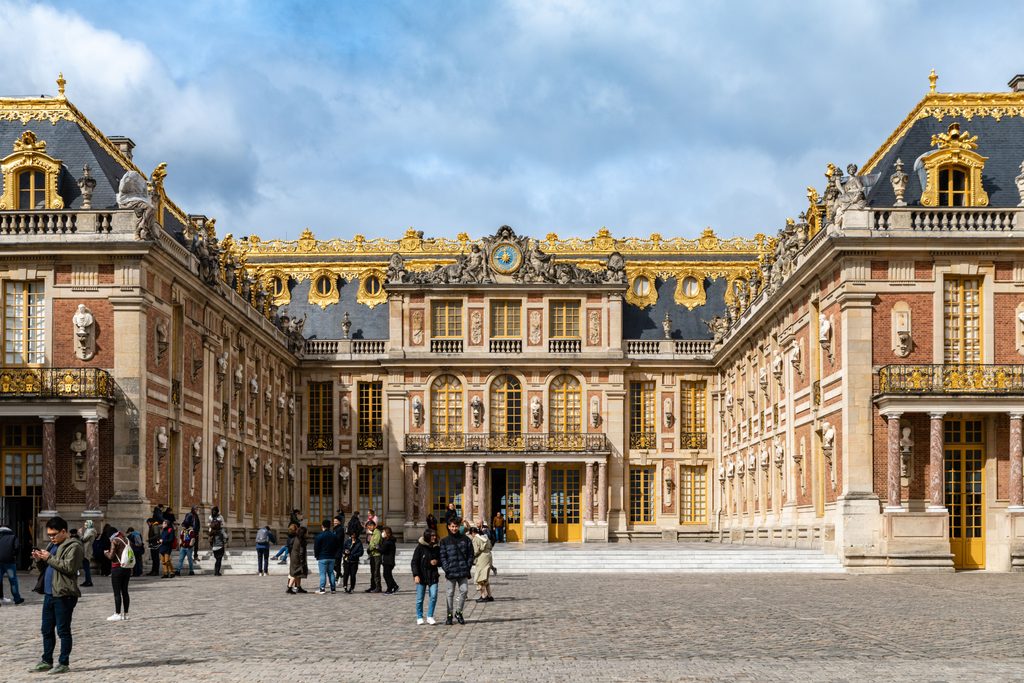
Louis XIV built Versailles to showcase absolute monarchy at its most extravagant, and the Hall of Mirrors still delivers on that promise more than 300 years later.
- Best for: History lovers and anyone who wants to see French grandeur at its peak.
- What you’ll enjoy most: The gardens, which are free to explore and often more memorable than the palace interior itself.
- The food: The town’s covered market, Marché Notre-Dame, is an easy, authentic lunch stop before or after.
4. Notre-Dame Cathedral, Paris
Devastated by fire in 2019, Notre-Dame reopened in December 2024 after a five-year restoration and has already drawn around 11 million visitors, roughly 30% more than before the blaze.
- Best for: First-time visitors who want a genuinely moving, free experience.
- What you’ll enjoy most: The newly restored, dramatically lighter interior, a real contrast to the cathedral most people remember from photos.
- The food: Berthillon ice cream on nearby Île Saint-Louis is a Paris institution worth the short walk.

5. Mont Saint-Michel
A monastery has crowned this tidal island off Normandy since the 8th century, and its causeway still floods at high tide, cutting it off from the mainland exactly as it has for over a thousand years.
- Best for: First-timers who want one dramatic day trip outside Paris.
- What you’ll enjoy most: Watching the tide come in from the ramparts, which is genuinely different every time you visit.
- The food: The famous fluffy omelette at La Mère Poulard is a local tradition dating back over a century.

6. The French Riviera (Nice & Cannes)
Nice and Cannes turned this stretch of Mediterranean coast into shorthand for glamour a century ago, and the red carpet at Cannes’ film festival still does the same job every May.
- Best for: Couples and first-timers who want beach time alongside city culture
- What you’ll enjoy most: The Promenade des Anglais in Nice at sunset, which locals use as much as tourists do
- The food: Socca, a chickpea-flour pancake sold from street stalls, is Nice’s signature bite
7. The Loire Valley Chateaux
French royalty built these countryside chateaux as retreats starting in the 15th century, and Chambord and Chenonceau remain two of the finest surviving examples of Renaissance architecture anywhere.
- Best for: First-timers who want fairy-tale scenery without leaving mainland Europe’s comfort zone.
- What you’ll enjoy most: Chenonceau’s arches spanning the river Cher, a view unlike any other chateau in France.
- The food: The region’s goat cheese, especially Crottin de Chavignol, pairs perfectly with local Loire white wines.
8. Provence (Avignon & the Lavender Fields)
Avignon was briefly the seat of the Catholic Church in the 14th century, and the Palais des Papes still dominates its skyline, while the surrounding countryside blooms lavender-purple every July.
- Best for: First-timers chasing the postcard version of southern France.
- What you’ll enjoy most: Driving the lavender routes around Valensole in peak bloom, roughly mid-June to late July.
- The food: Ratatouille and herbes de Provence season nearly everything on a Provençal menu.
9. Chamonix & Mont Blanc
The first recorded ascent of Mont Blanc in 1786 effectively invented modern mountaineering, and Chamonix has stayed the Alps’ most storied base camp ever since.
- Best for: Adventurous first-timers who want mountain scenery alongside their city time.
- What you’ll enjoy most: The Aiguille du Midi cable car, which puts you at nearly 3,842 metres without a single step of climbing.
- The food: A proper Savoyard fondue or tartiflette after a day in the mountains is non-negotiable.
10. Bordeaux
Bordeaux has shipped wine out of its port since the Middle Ages, and its historic center’s 18th-century architecture earned it UNESCO World Heritage status in 2007.
- Best for: First-timers who want wine country without sacrificing city comforts.
- What you’ll enjoy most: A vineyard tour in the surrounding Médoc or Saint-Émilion, both an easy day trip from the city.
- The food: Canelés, a small rum-and-vanilla pastry with a caramelized crust, originated right here.
What a Week in France Actually Costs
Budgets vary widely by season and city, but 2026 figures break down roughly like this, per person, excluding international flights:
- Budget: around $700–1,000 for the week, hostels or budget hotels, bakery breakfasts, market picnics, and public transport
- Mid-range: around $1,400–2,100 for the week: 3-star hotels, sit-down bistro meals, and a mix of paid attractions
- Luxury: $3,000 and up: 4- to 5-star hotels, fine dining, and private transport
Paris runs noticeably higher than the regions; a Louvre ticket costs about €32, the Eiffel Tower summit around €36.70, and a single metro ticket around €2.15–2.55. July, August, and ski season push prices up everywhere.
The Food You’ll Actually Eat
French food is regional first, national second; what you eat in Provence barely resembles what you eat in Alsace.
- Bread and pastry are a daily ritual, not a treat; a fresh baguette and a croissant are both considered breakfast basics
- Cheese comes in over 300 recognized varieties, and a proper meal often ends with a cheese course before dessert
- Wine is regional pride as much as beverage; Bordeaux, Burgundy, and the Loire each have a completely different personality
- Meal structure matters — lunch is often a fixed-price “formule,” while dinner tends to run longer and later than visitors expect
Where to Start
If you only have a week, pair Paris (Eiffel Tower, Louvre, Notre-Dame) with one region beyond it: Mont-Saint-Michel and Normandy for history, or Provence and the Riviera for warmth and food. Either way, you’ll leave understanding why France has held onto the world’s top tourism spot for three decades running.
FAQs on Top 10 Famous Places in France
Q1. What are the most famous places to visit in France?
The most famous places in France include the Eiffel Tower, the Louvre, the Palace of Versailles, and Notre-Dame Cathedral, all in or near Paris. Beyond the capital, Mont Saint-Michel, the French Riviera, the Loire Valley’s chateaux, Provence, Chamonix, and Bordeaux round out the destinations most first-time visitors prioritize. Each offers a genuinely different experience, from Gothic architecture to Mediterranean beaches to Alpine scenery, so most visitors combine two or three rather than trying to see everything in one trip.
Q2. Is Notre-Dame Cathedral open to visitors in 2026?
Yes. Notre-Dame reopened to the public in December 2024 after a five-year restoration following the 2019 fire, and it’s now welcoming visitors daily. Entry to the main nave is free, though a timed reservation is recommended to avoid long queues, especially during peak hours. The bell tower, which reopened separately in September 2025, requires a paid ticket booked in advance.
Q3. How much does a week in France cost?
A week in France in 2026 costs roughly $700–1,000 per person on a budget trip, $1,400–2,100 for a mid-range experience, and $3,000 or more for a luxury trip, excluding international flights. Paris tends to run higher than the regions, particularly for accommodation, while food and local transport stay comparatively affordable everywhere. Traveling outside July and August, and outside ski season in the Alps, generally brings costs down noticeably.
Q4. What is the best time of year to visit France?
April through June and September through October offer the best balance of good weather and manageable crowds across most of the country. July and August are peak season everywhere, with higher prices and the biggest crowds, especially in Paris and the French Riviera. If lavender fields in Provence are a priority, aim for late June through July specifically, since that’s the narrow window when they’re in full bloom.
Q5. What food should first-time visitors try in France?
Start with the basics done well: a fresh baguette, a proper croissant, and a cheese course are foundational to understanding French food culture. Beyond that, seek out regional specialties tied to where you’re visiting: socca on the French Riviera, canelés in Bordeaux, and the famous omelette at Mont Saint-Michel’s La Mère Poulard. Pairing regional wine with regional food, rather than the same bottle everywhere, is the single easiest way to eat and drink like a local rather than a tourist.