Top 10 Best Things to Do in Turkey: The Turkish Travel Guide

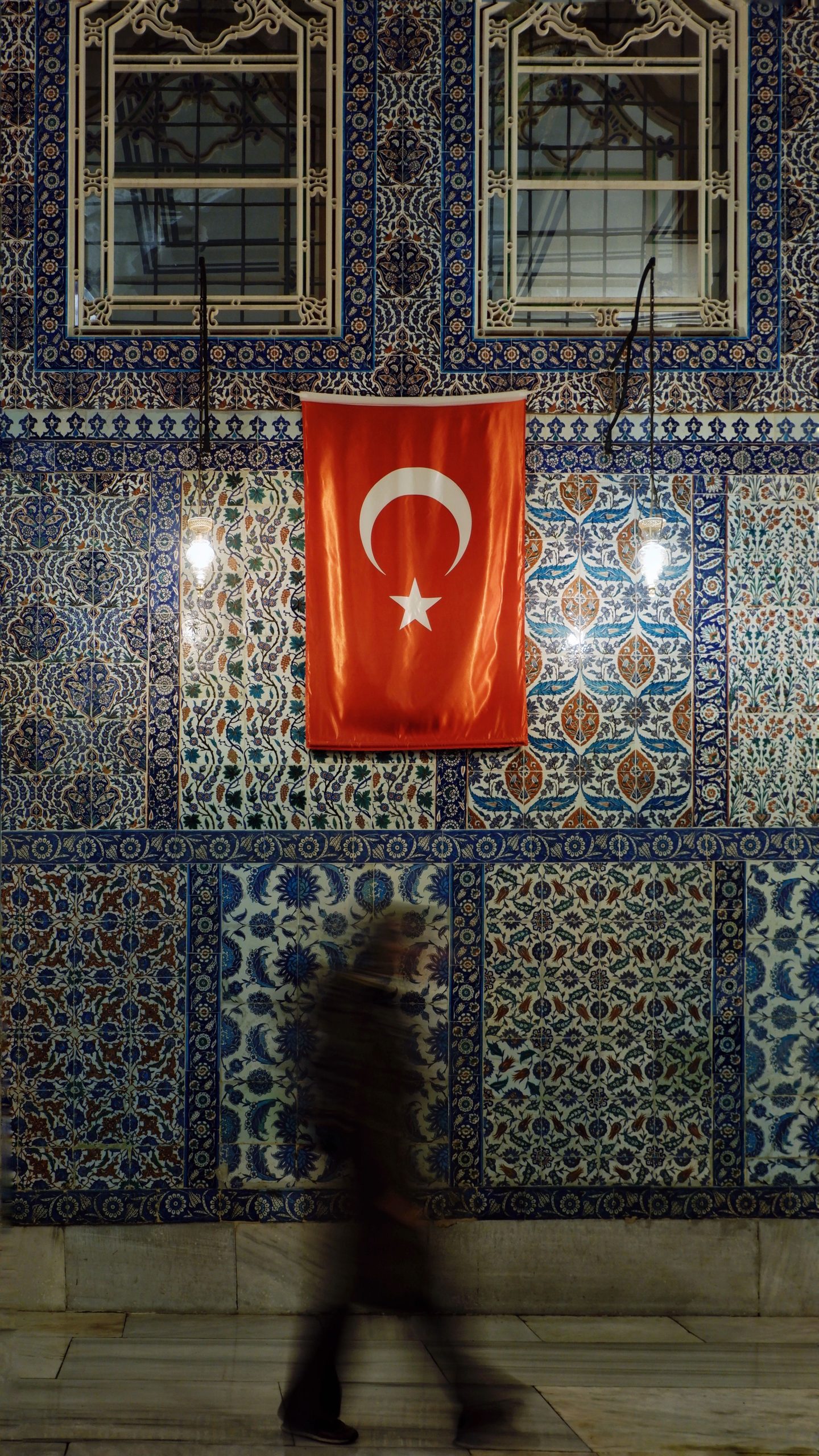
Turkey closed 2025 with a record 64 million international visitors and USD 65.2 billion in tourism revenue, vaulting past Italy, Mexico, and the UK to become the world’s fourth most-visited country, according to Turkey’s Ministry of Culture and Tourism and TurkStat data.
That momentum has cooled somewhat through 2026 — visitor numbers dipped year-on-year in several months amid regional tensions, even as spending per visitor actually rose.
Either way, the numbers put Turkey in rare company: only France, Spain, and the US now welcome more international visitors.
This guide covers the 10 best things to do in Turkey, with what each one actually costs, what to eat while you’re there, and where the trade-offs are.
By the end, narrowing the 10 best things to do in Turkey down to fit your own trip should feel far more manageable than it does right now.
Table of Contents
Top 10 Best Things to Do in Turkey
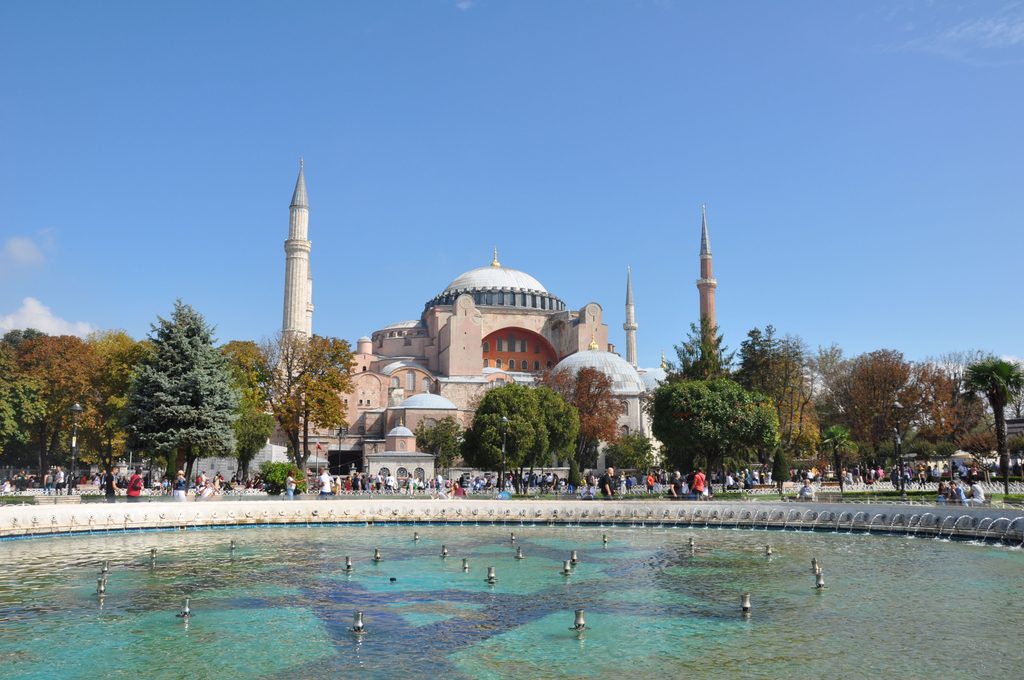
1. Istanbul
The only major city spanning two continents, Istanbul carries both Byzantine and Ottoman history in the same skyline, from the Hagia Sophia to the Blue Mosque.
- Best fit: First-timers wanting history, food, and city energy in one trip.
- Don’t miss: A Bosphorus ferry ride between Europe and Asia.
- Cost for a week: $1,000–$2,200.
- The food: A proper Turkish kebab and baklava from a generations-old bakery.
- Pros/Cons: Deep, layered history and excellent food, but the Grand Bazaar’s crowds and hard sells can wear thin.
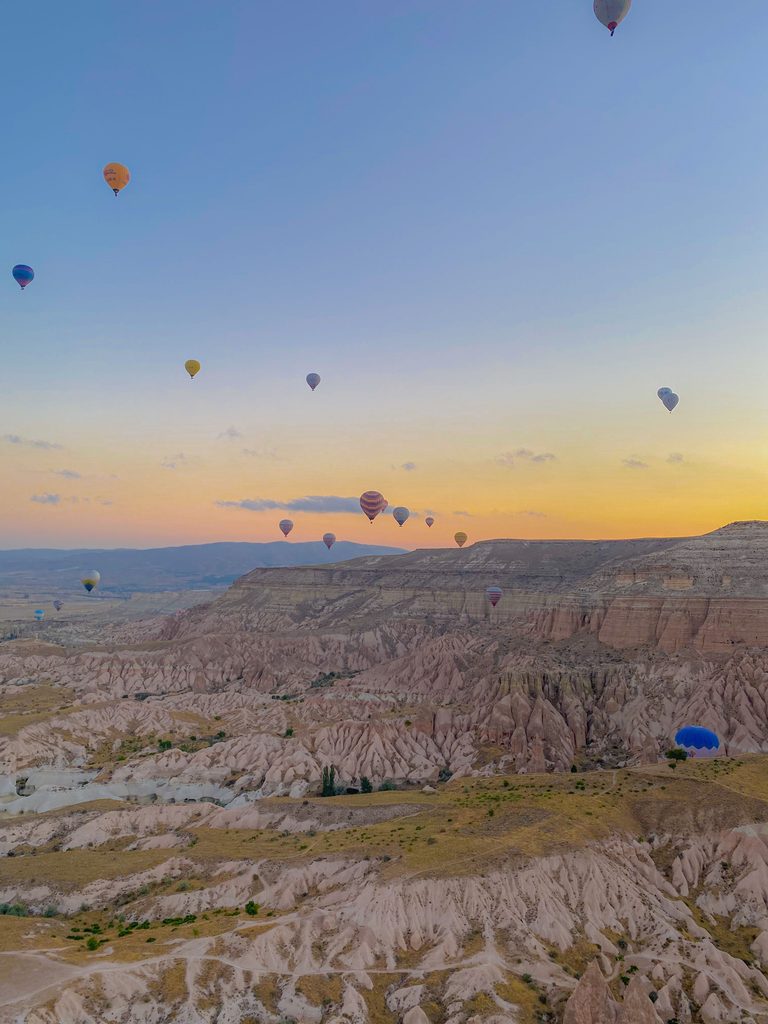
2. Cappadocia
Volcanic ash eroded over millions of years into the region’s famous “fairy chimney” rock formations, and early Christian communities carved entire underground cities into the soft stone to hide from persecution.
- Best fit: Couples and photographers.
- Don’t miss: A sunrise hot air balloon flight over the valleys.
- Cost for a week: $900–$1,900.
- The food: Testi kebab, meat slow-cooked in a sealed clay pot and cracked open at the table
- Pros/Cons: Genuinely unique scenery unlike anywhere else in the world, but balloon flights are often cancelled due to wind.
3. Pamukkale
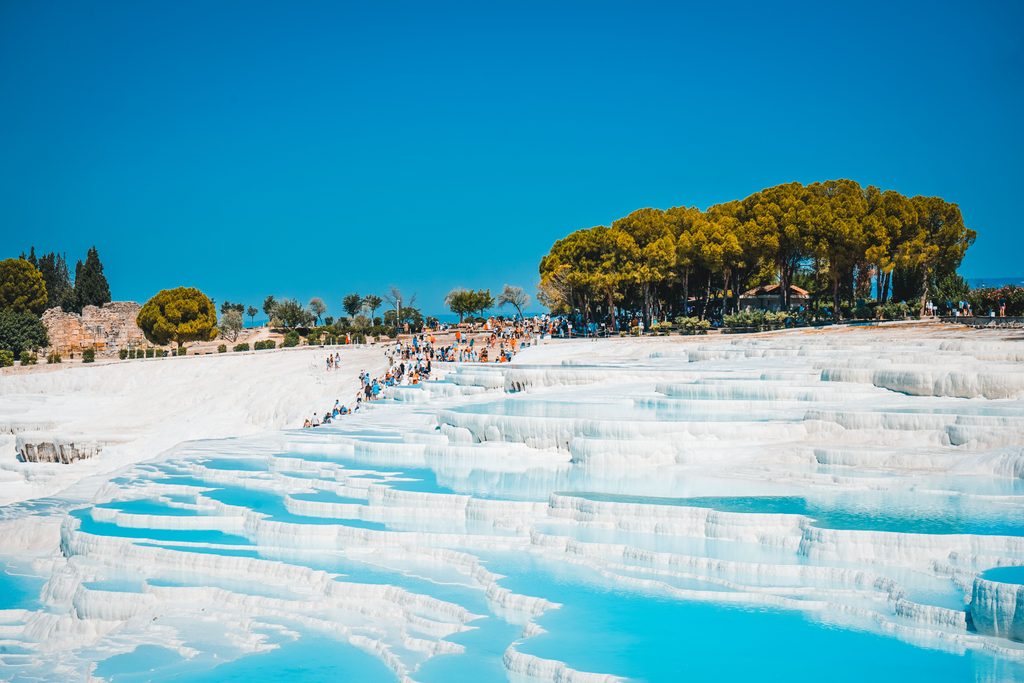
Mineral-rich hot springs have deposited white travertine terraces here for thousands of years, and the ancient Roman spa city of Hierapolis was built beside them to take advantage of the water.
- Best fit: First-timers who want to combine nature and ancient history in one stop.
- Don’t miss: Wading through the terraces’ shallow pools barefoot, as required to protect the site.
- Cost for a week: $700–$1,500.
- The food: Local Denizli-style kebab and fresh Aegean olives.
- Pros/Cons: A genuinely surreal landscape, but the terraces get crowded by mid-morning in peak season.
4. Ephesus
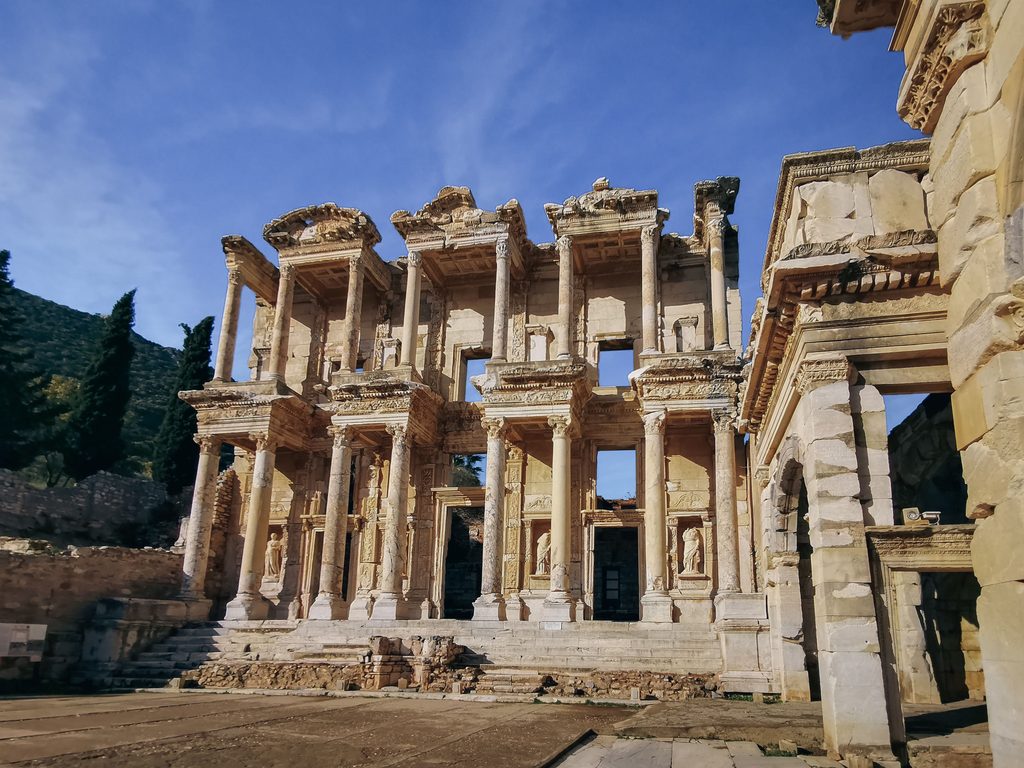
One of the best-preserved ancient cities in the Mediterranean, Ephesus once rivalled Rome in size and importance, and its Library of Celsus still stands nearly intact.
- Best fit: History lovers.
- Don’t miss: Walking the marble-paved Curetes Street down to the Library of Celsus.
- Cost for a week: $800–$1,700.
- The food: İzmir-style stuffed mussels, a specialty of the nearby coast.
- Pros/Cons: Extraordinarily well-preserved ruins, but little shade across the site in summer heat.
5. Antalya
Turkey’s leading beach destination by visitor numbers, Antalya layers Roman, Seljuk, and Ottoman history behind a modern resort coastline now known as the Turkish Riviera.
- Best fit: Families and beach-first travellers.
- Don’t miss: Hadrian’s Gate in the old town and a boat trip to nearby waterfalls.
- Cost for a week: $700–$1,600.
- The food: Fresh Mediterranean seafood and Antalya’s own piyaz bean salad.
- Pros/Cons: Reliable sun and excellent value, but the resort strips can feel disconnected from the rest of Turkey.
6. Bodrum
Built near the site of the ancient Mausoleum of Halicarnassus, one of the Seven Wonders of the Ancient World, Bodrum has since become the Aegean coast’s most upscale resort town.
- Best fit: Couples and nightlife-focused travellers.
- Don’t miss: Bodrum Castle’s Museum of Underwater Archaeology.
- Cost for a week: $1,100–$2,400.
- The food: Grilled octopus and a glass of local white wine at a harbourside restaurant.
- Pros/Cons: Polished and scenic with real nightlife, but noticeably pricier than Turkey’s other coastal towns.
7. Fethiye & Ölüdeniz
Ölüdeniz’s Blue Lagoon, a sheltered bay of near-still turquoise water, has made this stretch of coast one of Turkey’s most photographed, and the towering Babadağ mountain above it turned the area into a paragliding hub.
- Best fit: Adventure travellers and beach lovers combined.
- Don’t miss: A tandem paraglide landing directly on Ölüdeniz beach.
- Cost for a week: $800–$1,700.
- The food: Fresh-caught sea bass grilled whole, a coastal specialty.
- Pros/Cons: Dramatic scenery paired with a genuine adrenaline activity, but summer crowds book out paragliding slots early.
8. Troy
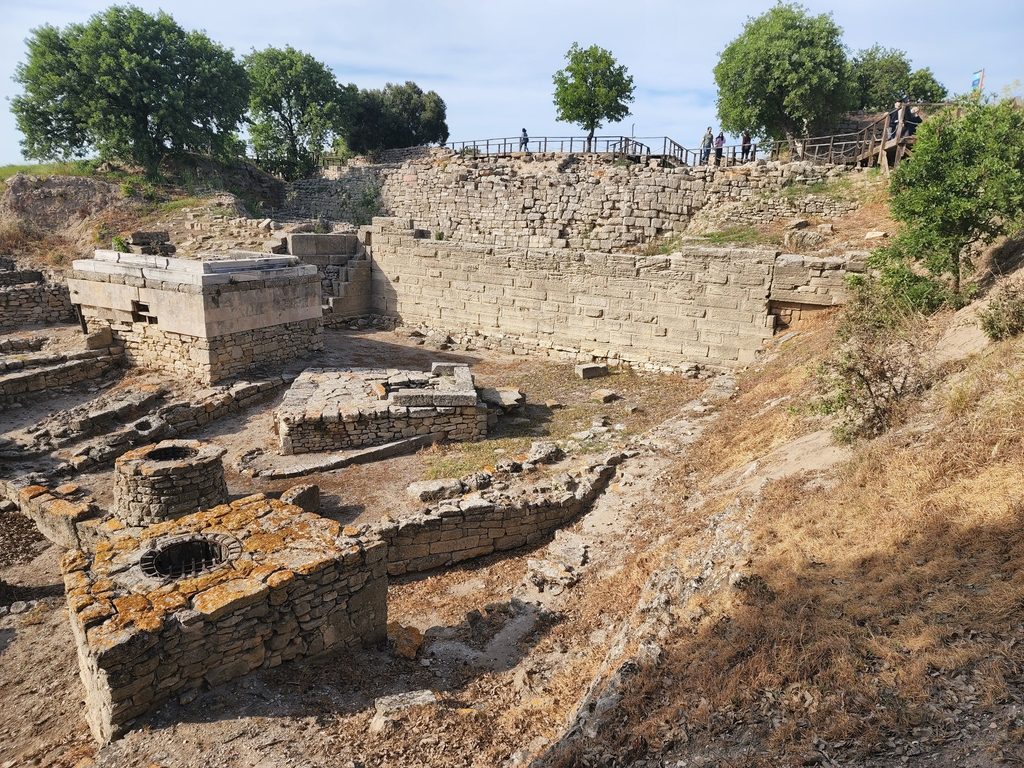
Immortalised by Homer and excavated from the 1870s onward, Troy is now a UNESCO World Heritage Site, with archaeological layers spanning roughly 4,000 years of continuous settlement.
- Best fit: History buffs willing to use their imagination.
- Don’t miss: The site museum’s detailed layer-by-layer excavation history.
- Cost for a week: $700–$1,500.
- The food: Çanakkale’s regional specialty, a slow-cooked lamb tandır.
- Pros/Cons: Genuine mythological and archaeological significance, but the ruins themselves are less visually dramatic than Ephesus.
9. Mount Nemrut
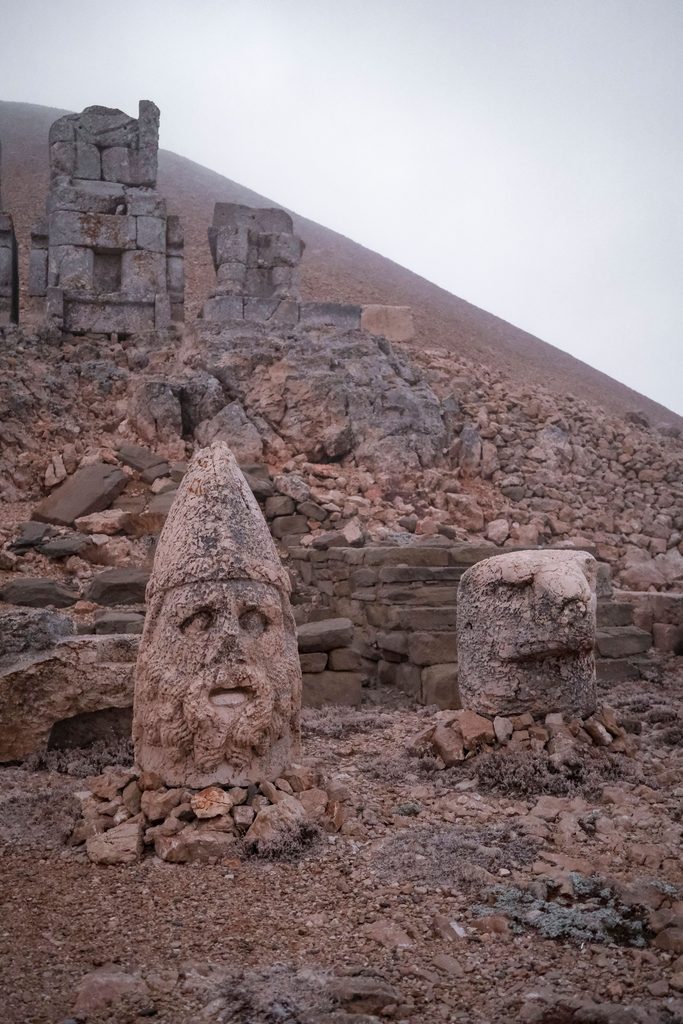
At the summit of this remote mountain sit colossal stone heads, toppled from their bodies by centuries of earthquakes, built as a royal tomb sanctuary by King Antiochus I around 62 BC and rediscovered only in 1881 — today protected as a UNESCO World Heritage Site.
- Best fit: Adventurous history travellers willing to take a detour
- Don’t miss: Sunrise at the summit, when the statues’ shadows stretch dramatically across the mountainside
- Cost for a week: $700–$1,400.
- The food: Adıyaman-region kebabs and fresh flatbread from a local köy evi (village house restaurant).
- Pros/Cons: One of Turkey’s most striking and least crowded sights, but genuinely remote and best reached with a guide.
10. Bursa
Turkey’s first Ottoman capital from 1326 to 1365, Bursa still holds some of the empire’s earliest imperial architecture, alongside Uludağ, one of the country’s main ski resorts.
- Best fit: History travellers wanting an easy day trip from Istanbul.
- Don’t miss: The Grand Mosque (Ulu Cami) and a visit to a traditional Turkish bath.
- Cost for a week: $700–$1,500
- The food: İskender kebab, invented in Bursa and named after its creator.
- Pros/Cons: Rich Ottoman history close to Istanbul, but less internationally known, so tourist infrastructure is thinner.
Best Turkey Destinations at a Glance
Picking from the 10 best things to do in Turkey gets easier once you think in terms of region and travel style.
If you’re building a Turkey travel guide 2027 itinerary and weighing the best places to visit in Turkey against a limited number of days, a rough pattern holds: the best Turkish cities to visit, Istanbul and Bursa, suit culture-first trips, while best historical sites in Turkey like Ephesus, Troy, and Mount Nemrut suit travellers chasing ancient history specifically.
Among top Turkish landmarks and iconic places in Turkey, the Hagia Sophia, Cappadocia’s fairy chimneys, and Pamukkale’s white terraces remain the three most recognisable, and each represents a genuinely different side of the country.
Whether you’re gathering Turkey vacation ideas for a family trip or picking the best Turkey destinations for first-time solo visitors, these 10 things to see in Turkey cover the full range worth exploring.
Cost of a Week in Turkey
Costs vary by region, though Turkey remains genuinely affordable by European standards. As a rough national range, per person, excluding international flights:
- Budget: $700–1,200/week — hostels, self-catering, public transport
- Mid-range: $1,200–2,200/week — 3-star hotels, sit-down meals, a mix of paid tours
- Luxury: $2,500+/week — 4- to 5-star hotels, fine dining, private tours
Bodrum and Istanbul run toward the higher end of this range, while Cappadocia, Troy, and Mount Nemrut tend to sit toward the lower end outside peak balloon season.
The Food You’ll Actually Eat
Turkish food to try goes well beyond kebabs — meze (small shared plates), fresh Aegean seafood, and Turkey’s deep tea and coffee culture all run through daily life regardless of region.
A few things hold true nationally: bread and tea accompany nearly every meal, regional specialties shift noticeably from the Aegean coast to central Anatolia, and market and street food (simit, a sesame-crusted bread ring, is the classic on-the-go option) offer some of the best value in the country.
Where to Start
If you only have one trip, pair Istanbul with one natural or ancient wonder (Cappadocia or Ephesus) for a combination that captures both sides of what makes this list of things to see in Turkey worth exploring.
Spring (April–May) and autumn (September–October) are generally the best time to visit Turkey overall, avoiding both summer heat on the coast and winter closures inland.
Check current entry requirements through Turkey’s official e-Visa portal well before booking, since rules vary by nationality.
Whatever combination of things to do in Turkey you choose, seasonal timing turns the 10 best things to do in Turkey from an overwhelming list into a plannable trip.
FAQs on Top 10 Best Things to Do in Turkey
Q1. What are the best things to do in Turkey for first-time visitors?
Istanbul covers Turkey’s history and food culture in a single, easy-to-navigate city, while Cappadocia or Pamukkale add an iconic natural-wonder leg for travellers with extra time. Ephesus works well as a half-day add-on for history-focused travellers, while Antalya or Bodrum suit those wanting beach time alongside sightseeing. Most first-timers do better pairing Istanbul with one or two regions deeply, rather than trying to cover the whole country in one trip.
Q2. How much does a week in Turkey cost?
A week in Turkey in 2026 runs roughly $700–1,200 per person on a budget trip, $1,200–2,200 for mid-range travel, and $2,500 or more for a luxury trip, excluding international flights. Costs vary by region — Bodrum and Istanbul sit toward the higher end, while central Anatolian destinations like Cappadocia and Mount Nemrut are generally more affordable outside peak season. Turkey remains noticeably good value compared to most Western European destinations.
Q3. Is Turkey still a top tourist destination in 2026?
Yes, though the picture is more mixed than the headline 2025 record suggests. Turkey closed 2025 as the world’s fourth most-visited country with 64 million visitors, but 2026 saw year-on-year visitor declines in several months, which officials attributed partly to regional tensions and geopolitical disruption. Even with that dip, Turkey remains firmly among the world’s top tourism destinations, and average spending per visitor has continued rising even as visitor numbers softened.
Q4. What is the best time of year to visit Turkey?
Spring (April–May) and autumn (September–October) offer the most comfortable weather across most of the country, avoiding summer’s intense coastal heat and winter’s inland cold. Summer (June–August) is peak season for the coast, particularly Antalya and Bodrum, while Cappadocia’s hot air balloon flights run year-round but are more frequently cancelled by wind in winter. If a specific site like Ephesus or Pamukkale is a priority, visiting early in the morning helps regardless of season, since both get crowded by mid-morning.
Q5. Do I need a visa to visit Turkey?
It depends on your nationality — many visitors can obtain an e-Visa online before travel, while others may be eligible for visa-free entry or need to apply through a Turkish embassy or consulate. Requirements and fees vary significantly by passport and change periodically, so check Turkey’s official e-Visa portal or your nearest Turkish diplomatic mission directly before booking. Confirming this early matters, since some nationalities need to apply well in advance rather than on arrival.
Read More:
- Top 10 Best Things to Do in New Zealand: The New Zealand Travel Guide
- Top 10 Best Things to Do in Australia: The Australian Travel Guide
- New Zealand Scholarships for International Students 2027: Requirements, Fully Funded Opportunities & How to Apply
If you found this article interesting, leave a comment for us below, and we will respond shortly.