Top 10 Tourist Attractions in Nigeria You Should Visit

Nigeria welcomed more than 1.2 million international visitors in 2023, a 20% jump from the year before. If you’ve been holding off on exploring Africa’s most populous nation, that kind of growth suggests you’re missing out on something worth seeing.
From a granite monolith that watches over the capital to a UNESCO-listed forest sacred to millions, Nigeria’s landscape is more varied than most travel guides let on. You don’t need weeks of planning to see the best of it — just this list.
Here’s your guide to the top 10 tourist attractions in Nigeria, where to find them, and what makes each one worth your time.
Table of Contents
Top 10 Tourist Attractions in Nigeria at a Glance
| Attraction | Location | Best For |
|---|---|---|
| Zuma Rock | Niger State | Photography, road-trip stop |
| Yankari National Park | Bauchi State | Wildlife safaris |
| Olumo Rock | Abeokuta, Ogun State | Hiking, history |
| Osun-Osogbo Sacred Grove | Osogbo, Osun State | Culture, UNESCO heritage |
| Obudu Mountain Resort | Cross River State | Adventure, cool climate |
| Lekki Conservation Centre | Lagos | Family day trips |
| Erin-Ijesha Waterfalls | Osun State | Waterfall hiking |
| Millennium Park | Abuja | Relaxation, picnics |
| Ogbunike Caves | Anambra State | Caving, folklore |
| Nike Art Gallery | Lagos | Art and shopping |
The Top 10 Tourist Attractions in Nigeria
1. Zuma Rock, Niger State
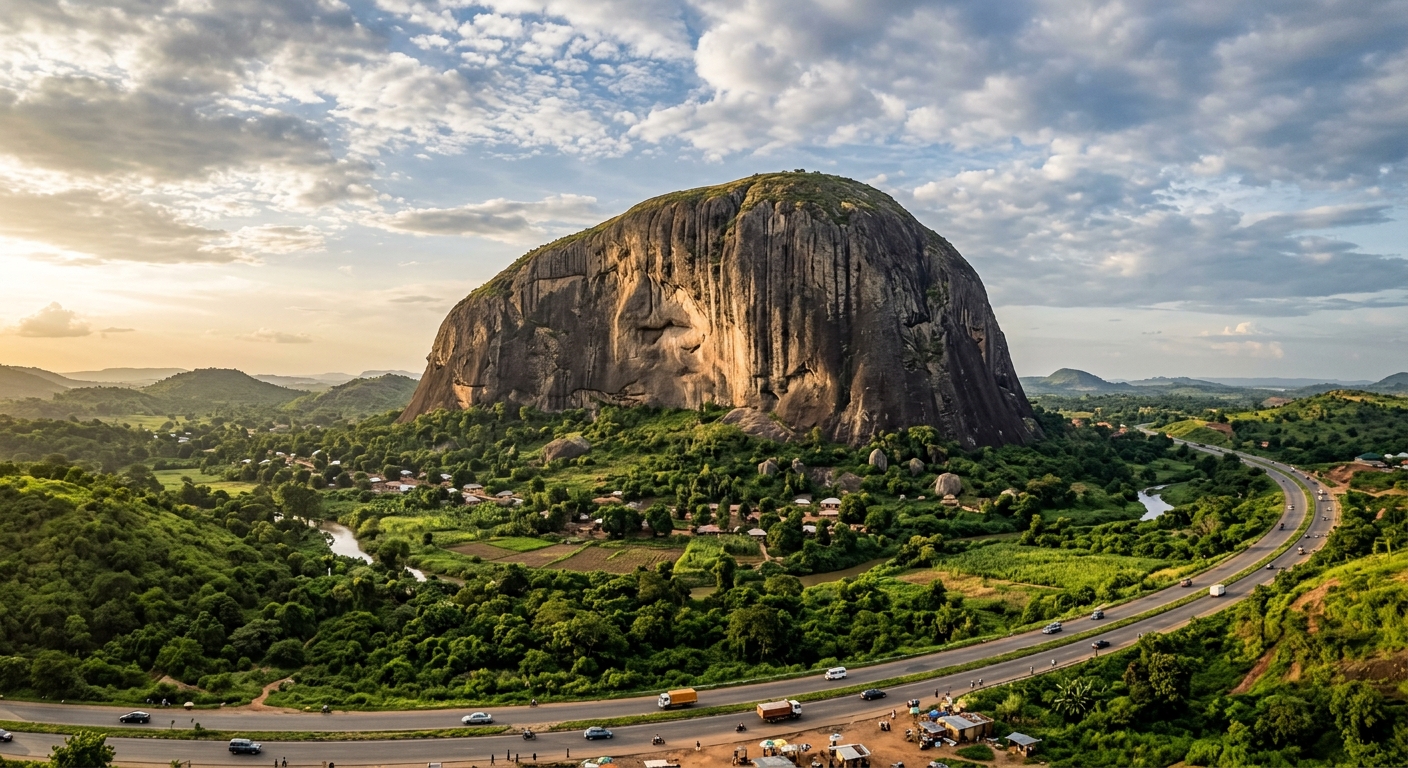
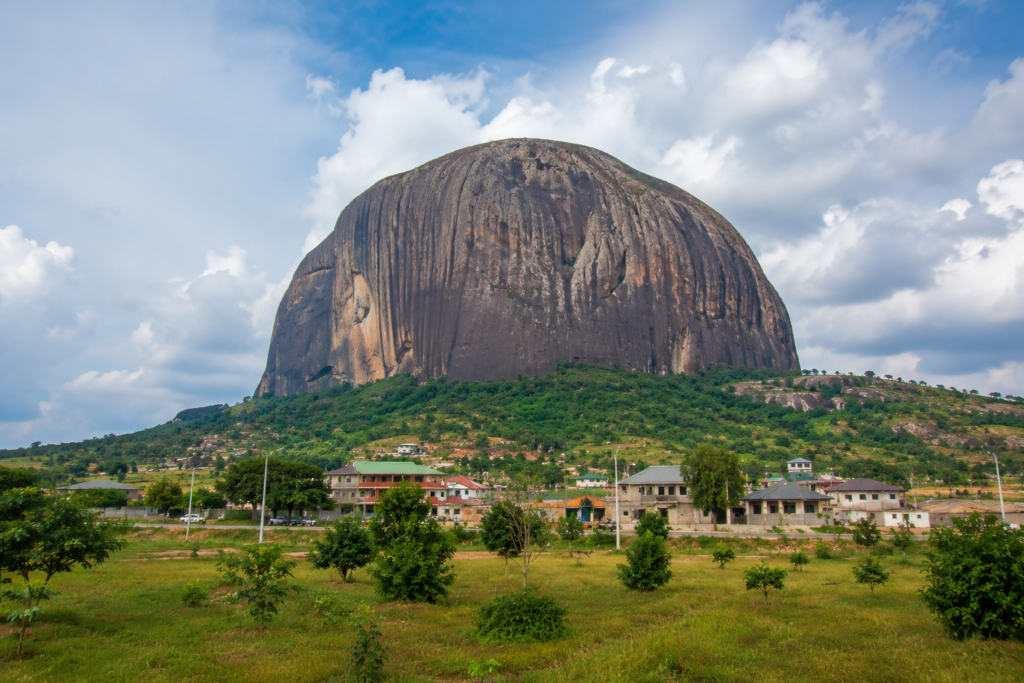
You can’t miss Zuma Rock if you drive between Abuja and Kaduna — it rises 725 metres above sea level and towers roughly 300 metres over the flat land around it. The rock even appears on Nigeria’s 100 naira note, and locals point out a face-like formation etched into one side by centuries of erosion. It’s about a 45-minute drive from Abuja, so it works well as a stop rather than a full trip.
2. Yankari National Park, Bauchi State
This is where you go for Nigeria’s best wildlife encounters. Yankari spans more than 2,000 square kilometres and shelters elephants, lions, baboons, and dozens of other mammal species. The Wikki Warm Spring inside the park lets you swim in naturally heated water after a day of game viewing.

3. Olumo Rock, Abeokuta
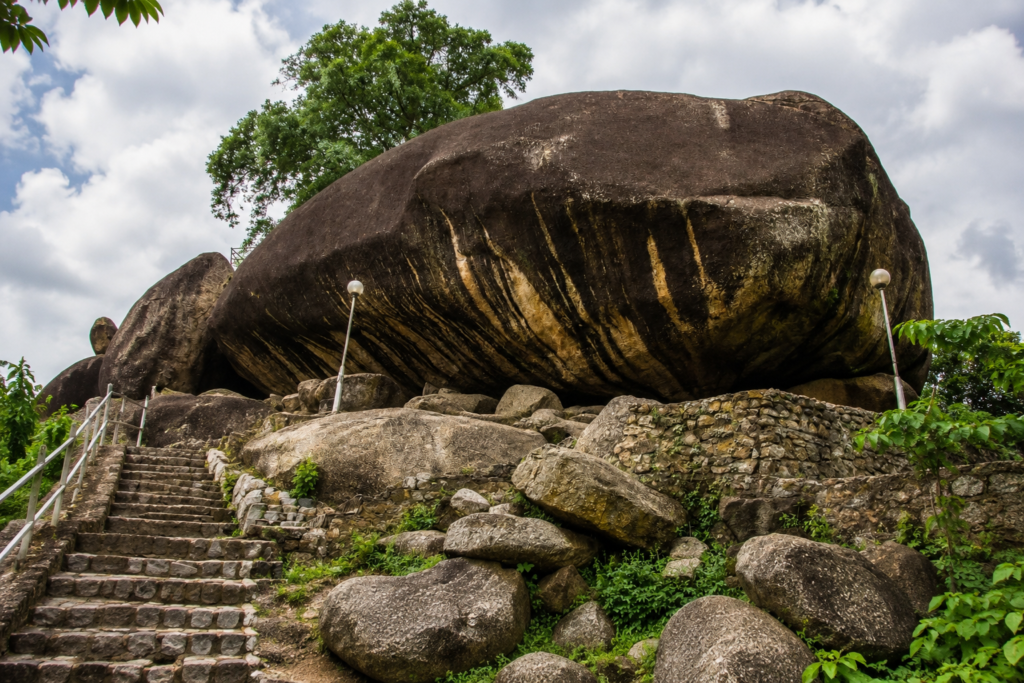
Standing 137 metres tall, Olumo Rock once sheltered the Egba people during 19th-century tribal wars, and today you can climb it using stairs and, in places, elevators built into the rock face. From the top, you get a sweeping view over Abeokuta’s rooftops. Local guides will walk you through the caves and shrines along the way.
4. Osun-Osogbo Sacred Grove, Osun State
If you want one stop that captures Yoruba spirituality, art, and nature together, this is it. The grove has protected 75 hectares of ancient forest along the Osun River since it earned UNESCO World Heritage status in 2005, and it holds more than 40 shrines and sculptures. Visit in August for the annual Osun-Osogbo Festival, when thousands of pilgrims arrive.
5. Obudu Mountain Resort, Cross River State
At Obudu Mountain Resort, you will feel the temperature drop as soon as you reach the Obudu Plateau, a highland escape near the Cameroon border. A cable car climbs roughly 870 metres from the base to the resort, giving you views most Nigerian destinations can’t match. Once up top, you can hike, ride horses, or cross the canopy walkway.

6. Lekki Conservation Centre, Lagos
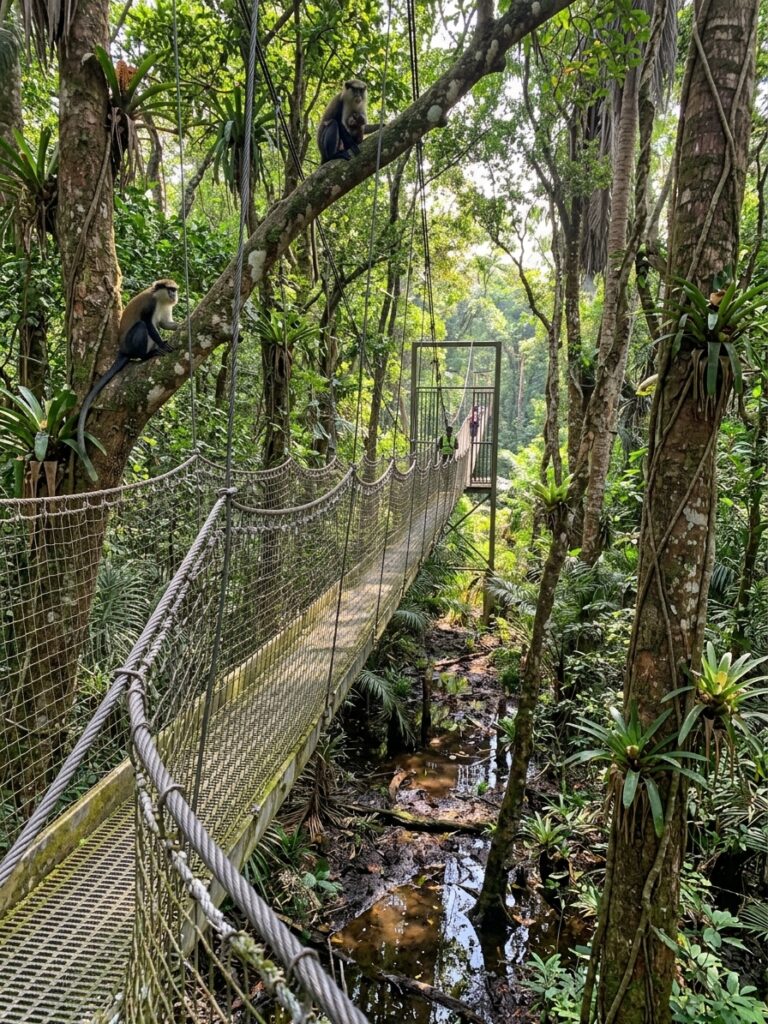
Lekki Conservation Centre, Lagos. This green oasis is minutes from Lagos traffic. There, you will find 78 hectares of wetland and forest anchored by Africa’s longest canopy walkway — 401 metres of suspended bridges up to 22 metres above the ground. Monkeys, crocodiles, and rare birds live along the boardwalk trails below. It’s an easy half-day trip if you’re based in Lagos.
7. Erin-Ijesha Waterfalls, Osun State
Locally known as Olumirin, this waterfall drops across seven distinct levels, and you can climb from one tier to the next on marked paths. Each level opens onto its own pool, so pace yourself and pick a spot to rest partway up. Bring sturdy shoes — the rocks get slippery near the water.
8. Millennium Park, Abuja
When you need a break from sightseeing, this Millenium park is Abuja’s largest green space at 32 hectares. Queen Elizabeth II inaugurated it in 2003, and it now offers fountains, walking paths, and shaded lawns. Entry is free, which makes it an easy add-on to any Abuja itinerary.
9. Ogbunike Caves, Anambra State
Tucked into a valley behind the Ogba hills, this cave system rewards you with cool air, dripping stalactites, and a river that locals believe has healing properties. Legend traces its discovery to a 14th-century hunter, and it’s protected today as one of Nigeria’s national monuments. Bring a flashlight — parts of the descent are dark and humid.
10. Nike Art Gallery, Lagos
At Nike Art Gallery, you will want at least an hour to take in this four-storey gallery. It is one of the largest in West Africa. Founded by artist Nike Okundaye, it displays thousands of paintings, textiles, and sculptures from across Nigeria. If you’re drawn to Adire and batik work, this is where you’ll find the best of it.
Plan Your Trip: A Simple Checklist
Before you set off, run through this list so nothing catches you off guard:
- [ ] Check the rainy season (April–October) if you’re visiting waterfalls or planning hikes
- [ ] Book Obudu Mountain Resort accommodation ahead of December and Easter
- [ ] Carry cash — many parks and reserves don’t accept cards
- [ ] Wear closed shoes for Erin-Ijesha, Ogbunike Caves, and Olumo Rock
- [ ] Confirm opening hours directly, since these shift seasonally
Getting Between Nigeria’s Top Sites
Most of these attractions cluster around a few travel hubs, so you can group your visits like this:
- Start in Abuja for Zuma Rock and Millennium Park — both sit within an hour of the city.
- Fly or drive south-west to Lagos for Lekki Conservation Centre and Nike Art Gallery.
- Continue into Osun State for the Sacred Grove and Erin-Ijesha Waterfalls.
- Head east to Anambra for Ogbunike Caves, or south-east to Cross River for Obudu.
- Add Yankari National Park in Bauchi if wildlife is a priority — it sits furthest out, so budget two to three extra days.
FAQs on Top 10 Tourist Attractions in Nigeria You Should Visit
Q1. What is the most visited tourist attraction in Nigeria?
The most visited tourist attractions in Nigeria are Erin-Ijesha Waterfalls and Lekki Conservation Centre; both draw large, steady crowds, but Zuma Rock is arguably the most recognisable, since millions pass it on the Abuja–Kaduna road and it appears on the national currency. Osun-Osogbo Sacred Grove sees a major spike every August during its festival, when it can outdraw every other site on this list for that week alone. If you want big crowds and photo opportunities, plan around a public holiday or festival date. For a quieter visit, weekday mornings work well almost everywhere here.
Q2. Is Nigeria safe for tourists in 2026?
Most attractions on this list — Zuma Rock, Lekki Conservation Centre, Millennium Park, Olumo Rock, and the Osun-Osogbo Sacred Grove — sit in areas with regular tourist traffic and established security. You should still check current travel advisories for your specific route, avoid isolated northeastern border regions, and travel with a local guide where one’s offered, especially at Yankari and Obudu. Sticking to daylight hours, using registered tour operators, and keeping valuables out of sight covers most of the risk you’re likely to face.
Q3.What is the best time of year to visit Nigeria’s tourist attractions?
The best time of year to visit Nigeria’s tourist attractions is between November and March, Nigeria’s dry season, which suits Zuma Rock, Millennium Park, and wildlife viewing at Yankari. If you prefer waterfalls, visit Erin-Ijesha between April and October instead, when rainfall keeps the cascades at full strength. August is worth planning around if you want to catch the Osun-Osogbo Festival. Avoid the height of the rains for hikes at Olumo Rock or Ogbunike Caves, since the paths get slippery.
Q4. Which Nigerian tourist attraction is a UNESCO World Heritage Site?
The Osun-Osogbo Sacred Grove in Osun State is Nigeria’s best-known UNESCO World Heritage Site, inscribed in 2005 for its role in Yoruba spiritual and artistic tradition. Spread across 75 hectares along the Osun River, it holds more than 40 shrines and sculptures dedicated to the goddess Osun. Nigeria’s only other UNESCO-listed site is the Sukur Cultural Landscape in Adamawa State. If heritage travel interests you, pair a visit to the grove with nearby Erin-Ijesha Waterfalls for a full day in Osun State.
Q5. How many days do you need to see Nigeria’s top attractions?
You can cover Abuja’s Zuma Rock and Millennium Park in a single day, and Lagos’s Lekki Conservation Centre and Nike Art Gallery fit comfortably into another. Osun State’s Sacred Grove and Erin-Ijesha Waterfalls pair well over one to two days. If you want the full list, including Yankari and Obudu, budget seven to ten days total, since those two sites sit furthest from the others and involve longer drives or domestic flights.